Europe: Fast food brands criticised for lack of progress on poultry welfare
Europe’s biggest fast food brands are failing to deliver meaningful improvements in chicken welfare, despite years of public pledges, according to a new NGO ranking that warns voluntary action has reached its limits as regulatory reform looms.
The Pecking Order 2025, compiled by a coalition including World Animal Protection, Essere Animali, Humane World for Animals and Obranci Zvirat, assesses 81 fast food and food-service companies across 7 European countries against the European Chicken Commitment. Introduced in 2017, the European Chicken Commitment sets minimum welfare standards for broiler production and is due to be fully implemented this year.
The ranking reveals a growing gap between policy ambition and practical delivery. While companies achieve an average score of 41% for commitments and targets, performance reporting stands at just 12%. Only 37 companies have policies fully aligned with the European Chicken Commitment, and fewer than half publish meaningful data showing whether on-farm welfare is improving, according to the survey.
Fast food brands that are falling behind
Major international brands – including McDonald’s, KFC, Subway, Starbucks and Burger King – are highlighted as falling behind. McDonald’s, the report notes, has yet to sign up to the European Chicken Commitment in any European country, despite its scale and purchasing power.
The most significant failure
The transition to higher-welfare chicken breeds emerges as the sector’s most significant failure. Slower-growing breeds are widely recognised as the single most effective way to reduce welfare problems such as lameness and cardiovascular issues, yet adoption remains extremely limited.
As a core European Chicken Commitment requirement, failure to act on breed change undermines wider welfare commitments and leaves millions of birds exposed to preventable health problems associated with intensive genetics.
France at the top, and those at the bottom
Progress also varies sharply between countries. France tops the rankings, with Sweden and Denmark also performing relatively well – markets where public concern over animal welfare has translated into stronger expectations and pressure on companies.
By contrast, Italy, Poland, the Czech Republic and Romania continue to lag, illustrating what the report describes as a fragmented European approach.
“Voluntary commitments are insufficient”
With the 2026 European Chicken Commitment deadline approaching and the European Commission expected to propose the first major overhaul of EU farm animal welfare law in more than a decade, the organisations argue that voluntary commitments are no longer sufficient.
They warn that weak welfare standards also carry broader risks, including higher antibiotic use, antimicrobial resistance and heightened disease vulnerability.
An alignment to mandatory minimum standards
The NGOs are calling on Brussels to align mandatory minimum standards with the European Chicken Commitment, introduce enforceable reporting requirements and phase out the most harmful practices in broiler production.
The report frames 2026 as a decisive moment – not just for corporate credibility, but for the future direction of poultry welfare regulation in Europe.
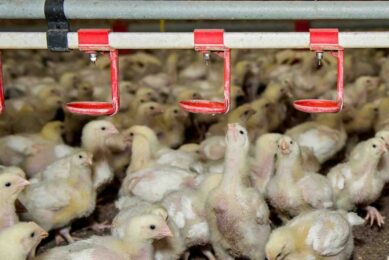
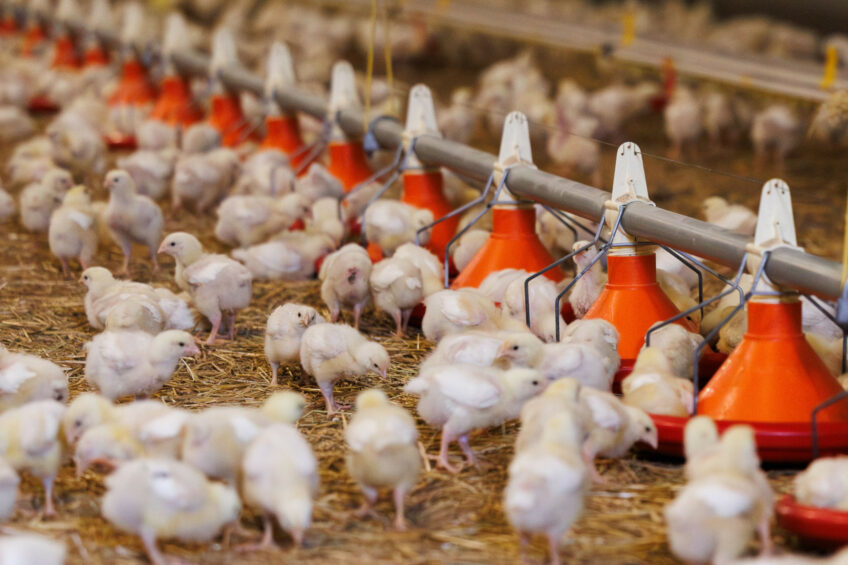
Dirk Verdonk, director of World Animal Protection (Netherlands), said: “Companies are presenting themselves as responsible while failing to show meaningful evidence that conditions for chickens are improving. Consumers are being misled, and chickens continue to suffer unnecessarily, with cruel practices such as intense overcrowding and extremely fast-growing breeds, widespread.”
Join 31,000+ subscribers
Subscribe to our newsletter to stay updated about all the need-to-know content in the poultry sector, three times a week.