Taking laying persistency to the next level

By 2030, the world’s population is expected to exceed 8.5 billion, which means the need for cost-effective and nutritious animal protein is rising – fast. Eggs play a vital role in meeting this demand as one of the most affordable and accessible sources of nutrition worldwide, fitting into almost any diet. What does this mean for producers? It means an opportunity, as we need more eggs, produced more efficiently. The solution can be found in improved laying persistency.
That’s why Cargill Animal Nutrition & Health is leading the way – not only through research into how we can produce more eggs, but by turning these insights into practical, actionable strategies that help producers achieve better laying persistency globally, with a clear ROI. Let’s take a closer look.
Why laying persistency matters
Persistency is both a performance metric and a profitability driver. When laying hens are more persistent in their egg production and live longer, producers can delay the required large investment of replacing their flocks. In addition, dependent on the feeding strategy, more persistent hens have a lower feed cost per egg, improved efficiency, and better sustainability metrics. In today’s market, where margins are tight and pressure is high, maintaining consistent production is critical for long-term success.
For producers worldwide, the question is: How do we keep layers productive for longer without compromising health or efficiency?
How many eggs can a healthy hen actually lay?
The lifetime egg production capacity of hens has increased tremendously in the last 50 years. In the 1960s, it was around 220 eggs – and by 2019 it was 500 eggs (van Eck et al., 2023).

The ability of modern laying hens to produce up to 500 eggs in 100 weeks is a remarkable benchmark for global egg production, but achieving this level of persistency demands science-backed nutrition strategies that safeguard health and performance over time. This means that we need to know why that matters, and how to meet the needs of laying hens where they need them most. The answer lies in the research.
Breakthrough research by the sharpest minds in the industry
To understand what truly drives persistency, our scientists conducted a unique 110-week study at Cargill’s global innovation centre in the Netherlands. The findings, now published in Poultry Science, reveal 2 critical insights:
- Investing in the rearing period matters: Birds fed diets with low amino acid levels during rearing had lower body weights and reduced laying persistency beyond 100 weeks. This highlights the importance of early nutrition in setting birds up for long-term success.
- Energy and lipid levels during laying drive performance: Diets with less added oil shortened laying periods, reduced egg weights, and shifted fat storage to the liver, negatively impacting efficiency and persistency. Fat metabolism is essential for egg production, and certain hormones produced by fat tissue were linked to body weight and egg mass for the first time in laying hens.
These results underscore the importance of tailored nutrition strategies across the entire lifecycle – not just during peak production. Persistency starts long before the first egg is laid.
This study builds on research conducted last year by Cargill Sr. scientist Dr Lieske van Eck and poultry technology lead Ines Carvalhido, in collaboration with Wageningen University. That 55-week study, also published in Poultry Science, highlighted the role of precision nutrition, the trade-offs between peak production and lifetime output, and the importance of supporting liver health and optimal body composition for sustained laying performance.
From science to solutions
 Our research lays the foundation for solutions that matter. At Cargill Animal Nutrition & Health, we transform these insights into integrated solutions that combine:
- Science-backed nutrition programs with products that are proven in real-world conditions to support healthy and productive flocks.
- Expert people who understand poultry challenges and work alongside producers to apply findings practically.
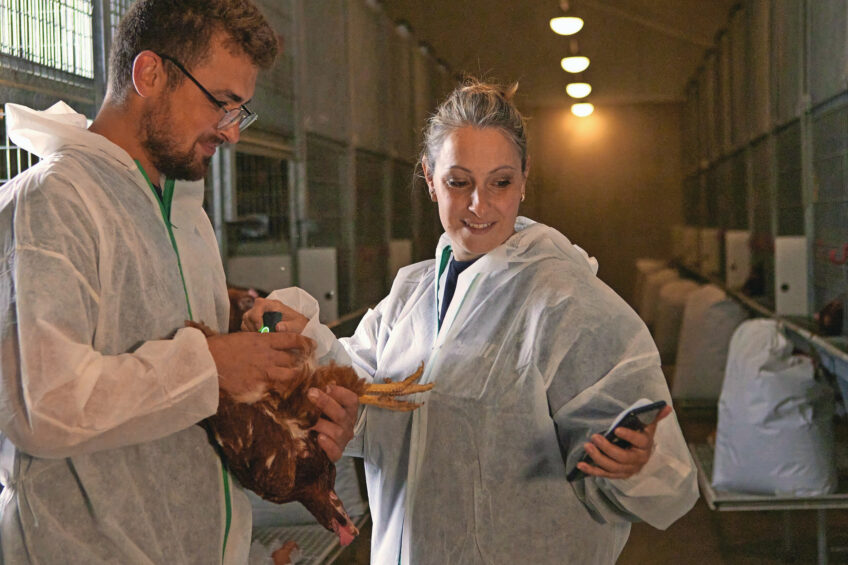
- Decision-enabling platforms like Reveal Layers, which allow real-time monitoring of hen body condition, helping producers implement strategies that sustain persistency and reduce feed costs.
The role of Reveal Layers
Reveal Layers is a first-of-its-kind, non-invasive near-infrared (NIR) technology that monitors poultry body condition. It combines our products, people, and platforms to help poultry producers:
- Make real-time decisions: Reveal Layers provides real-time data on body condition, enabling precise adjustments to diet composition based on flock insights.
- Support long-term egg production: Optimal body condition supports sustained egg production over the long term, ensuring hens remain productive while maintaining good health.
- Improve profitability: By combining Reveal Layers with Cargill’s nutritional expertise, producers can reduce feed costs while increasing egg production.
The practical impact
Better persistency means more eggs per hen, improved feed efficiency, and stronger ROI. By connecting research with actionable tools, we help producers achieve next-level performance –even under stress conditions. This is how we deliver measurable impact across the poultry value chain.
Want to see how these insights can work for your laying hen programs? Contact us today and discover how our integrated solutions – powered by products, people, and platforms – can help you achieve better laying persistency and performance.
Join 31,000+ subscribers
Subscribe to our newsletter to stay updated about all the need-to-know content in the poultry sector, three times a week.