Vaccination against avian influenza in Poultry World 1
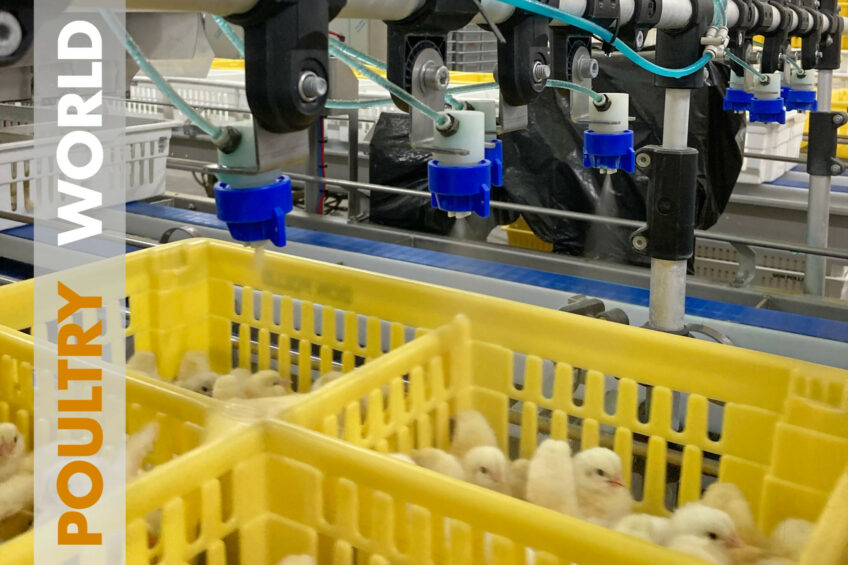
The latest edition of Poultry World is available online. In this edition we take a look at how surging avian influenza outbreaks are prompting expert calls for vaccination amid regulatory frustrations. We visit Colombia’s automated Don Pollo hatchery, cover Hendrix Genetics’ expansion ambitions, and consider precision technologies for broiler production and chicken comfort. We also look at Saudi Arabia’s self-sufficiency push under Vision 2030, US dependence on imported feed additives, and feature practical insights on optimal incubation temperatures for hatchability. This and more in the latest online edition.
Experts demand action from all stakeholders
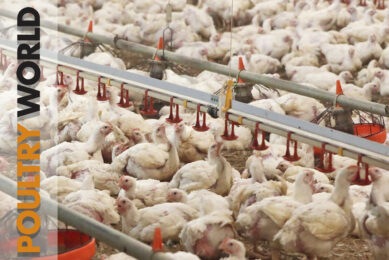
After 2 relatively calm winters, avian influenza is causing havoc on poultry farms across Europe and in many countries worldwide. With vaccines ready and approved, experts recommend a vaccination drive. As the economic, social, and ethical impacts of the outbreak grow, so does the frustration with regulations that are a non-starter.
Interview: Vaccination: Get started and monitor
In this interview with Arjan Stegeman, a professor of farm animal health at Utrecht University in the Netherlands, we discuss an explanation for the current virus explosion, if this is a new reality and if the way we deal with avian influenza in Europe still make sense, and how European regulation hinders vaccination. Also, the opinion of Gert Jan Oplaat, president of poultry processors organisation AVEC.
‘Technology and automation have the future’
Hidden away in the rolling hills outside the Colombian town of Armenia, the Don Pollo hatchery is the centrepiece of the growth of local poultry production. The facility was built in 2010 and recently received upgrades in capacity and automation to meet current and future demand in an expanding market.

Interview: “Our impact carries great responsibility”
Hendrix Genetics aims to become the number one or two in every animal species with which it is active. The recent acquisition of Danish Genetics underscores this ambition. The company is currently exploring opportunities in laying hens and slower-growing broilers in China and Europe. Capital is available for acquisitions. We interview Richard Maatman, CEO of Hendrix Genetics, to find out more.
Chicken comfort: Key to health, behaviour and performance
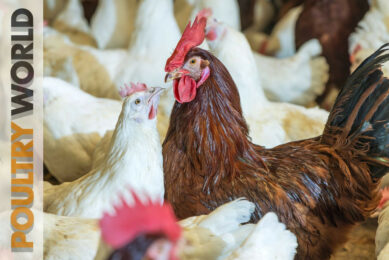
Chicken comfort is essential not just for welfare, but also for health, behaviour, and productivity. Key factors, including housing, nutrition, and lighting, when properly managed, can create conditions that support healthier birds, better performance and higher-quality poultry products.
The bigger picture: Last stand against Mercosur
In this centre spread we see farmers across Europe take to the streets to protest against the Mercosur deal.
Antimicrobial use in animals slows as the risk of resistance persists
Global reports to reduce antimicrobial use in livestock production are beginning to slow down, according to a recent report from the World Organisation for Animal Health (WOAH). Overall use continues to decline, but at a slower pace. In a recent interview, Dr Javier Yugueros-Marcos, head of WOAH’s Antimicrobial Resistance and Veterinary Products Department, said that without renewed reports from governments, industry, and veterinarians, momentum on antimicrobial resistance could wane.

The importance of optimal incubation temperature
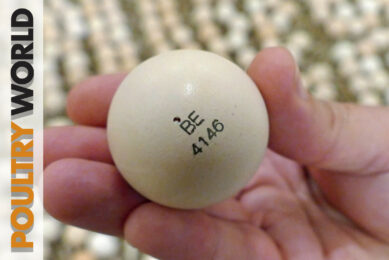
The hatchability of chicken eggs significantly depends on a critical factor – the incubation temperature setpoints. While, in theory, the optimal eggshell temperature during incubation is 100°F (37.8°C), achieving and maintaining this is far from a straightforward task. This article describes the fundamental impact of eggshell temperature and how hatchery managers can effectively manage the incubation temperature to ensure optimal results.
Brazil: Celebrating 50 years of chicken exports
August 2025 marked 50 years since Brazil made its first shipment of chicken meat abroad, destined for Kuwait. Since then, the country has transitioned from being an importer, once purchasing poultry from France to meet domestic demand, to becoming the world’s largest supplier of chicken meat.
Uncertainty looms over the Saudi poultry sector
As part of its Vision 2030 strategy, Saudi Arabia has launched an ambitious initiative to achieve 90% self-sufficiency in poultry production, a figure unprecedented for the Middle East. The growth, which is primarily facilitated by heavy state investments, might be in jeopardy due to a mix of climate and economic factors.
Data reveals US dependence on imported vitamins and amino acids
New data confirms an alarming need for the US feed sector to boost its independence in terms of imported vitamins and amino acids.
Technologies transforming today’s broiler meat production
In a recent study, researchers provided a concise evaluation of some of the available precision livestock farming technologies for improving broiler meat production. They assessed the benefits, limitations and strategies for further development of the technologies.
Column: Strong finish and a good start
Jimmy Smith, a former banker, now a poultry and arable farmer, writes about the end of one laying hen production cycle, the resignation and replacement of a layer farm manager, strong hen performance, facility maintenance, and progress on a major expansion project at a new site.