Interview: Speaking up for the farmers who feed us
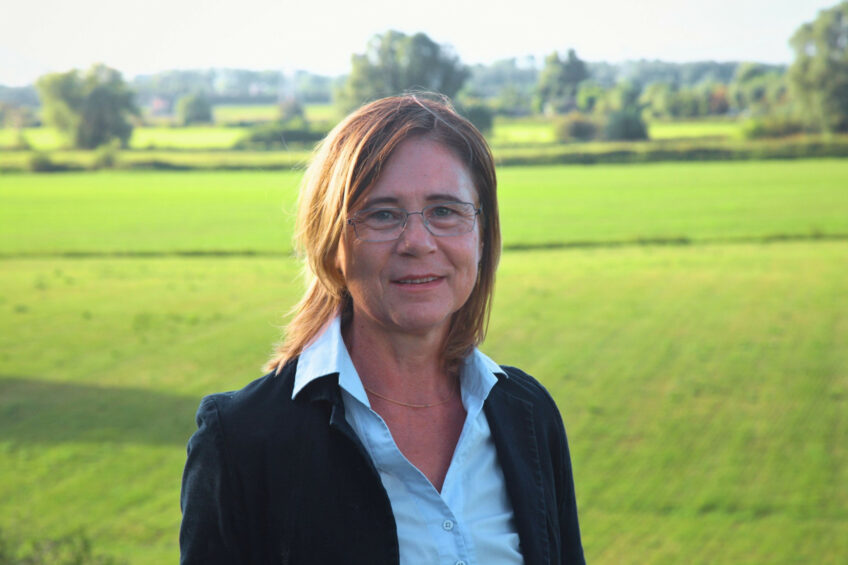
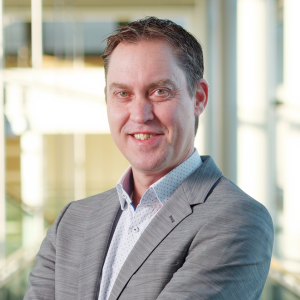
Growing up in the rural community of Ospel in the Netherlands, Anne-Marie Neeteson-van Nieuwenhoven’s strong interest in food production has been the main motivation for pursuing a career in the animal sector. “Speaking up for the people who are involved in making our food has kept me going all these years,” she states. Together with Poultry World, Anne-Marie reflects on her career shortly before retirement.
Poultry meat is now affordable for many more people across the globe, offering an easily digestible source of protein with well-balanced amino acids. The remarkable improvement in Feed Conversion Rate over time – accompanied by simultaneous advances in animal welfare and health – is impressive.
Over the decades, Anne-Marie has witnessed both challenges and progress. These include meeting growing demand driven by population growth and rising incomes across more regions, the expanding role of poultry in the global animal protein supply, and shifting societal perceptions of poultry production and animal welfare.
Soon after I started in 1995, there was a big buzz about Dolly the cloned sheep. This led to quite some discussions about the fundamentals of animal breeding. A considerable part of citizens rejected the idea of introducing novel techniques – there was a bridge to be built between the consumer who is more distant from food production than in the past, and the food producers.
We started investigating where we as breeders can make a difference for sustainability, with support from, among others, ethicists, and by involving welfare and consumer organisations as well as scientists. Breeders did not just want to talk; they also wanted a tool to illustrate how they make a difference. This led to the creation of a Code of Good Practice based on the areas where we can make an impact and describing how we do so. This is Code-EFABAR.
In poultry breeding, the number of traits in the breeding program is huge. In the Aviagen Group, great care, with an eye for detail, forms the basis of a balanced breeding program. Yet, this is not always the message that prevails in society about poultry breeding. My personal drive is to get stakeholders on the same page by telling the truth, illustrated with facts, whether or not that makes you popular in the public eye. I work to solve misunderstandings or misperceptions and to get the real story out. I am best at the first part: diving in, and then when the first steps are made, other people are often better at building out further. That was the case with EFFAB and FABRE TP, and now with my work for Aviagen Group.
A challenge of a different nature is the perception of poultry production and welfare by society. Although animal welfare is defined by the welfare as experienced by the bird, we face the issue that society’s perception of animal welfare often differs. Poultry has shown to be an easy target for criticism. The gap between welfare as perceived by the bird and by society or policymakers may lead – and has led – to welfare “solutions” in laws and regulations that do not necessarily benefit the bird.
My role in Aviagen has provided many excellent opportunities to cooperate with colleagues and associations across the globe to work toward bridging that gap. That said, we need to build more powerful representation – lobby to policymakers, opinion leaders and citizens. This should provide answers to the questions that live in society and must be based on data, improvements achieved and foreseen, the role of animal foods and the excellent proposition we offer for food security, welfare and sustainability. The facts must be right, and show our commitment toward continuous improvement.
In addition, we must also build more intelligence on why people are concerned, how communication works, and the many elements behind the success of criticism of farming, and breeding. The poultry-critical area is very well funded by influential societal parties operating in close cooperation. Joining forces in precompetitive cooperation across poultry organisations and businesses should be the first step, followed by serious and continued investments to support lobbying, communication, and society outreach work.
I concentrate here on innovations in breeding. Individual feed and water measurements of pedigree birds whilst they are in a group environment is an important one improving all 3 areas. The introduction of multi-environment selection has been instrumental for breeding healthy and robust birds. A relatively new one is computed tomography, which provides opportunities to measure a broad range of traits varying from breast meat to skeletal aspects on the birds themselves.
And let’s not forget genomics, which provides information from pedigree birds about traits that can normally only be measured later in life or on birds of the other sex. This allows for great improvements in selection accuracy. In the field, this results in further improvements in health and welfare, environmental impact, and production compared to using traditional selection methods. In a similar way, many technical and data management innovations allow improvements in farm and hatchery management, transport, and processing.
In poultry breeding, various promising opportunities could come from better insight into the biology of the bird – for instance, the gastrointestinal tract – from measuring and understanding bird behavior in a group setting to further fine-tuning innovations like the CT scan. Innovations made in breeding have allowed poultry to have better health and welfare, be more productive, and more environmentally sustainable. However, every flock is different, and in practice, housing, nutrition, and management are determining factors for the outcome of a flock. Also, even with all the technology in place, people make the difference for the bird.
Where initially welfare and environmental sustainability were alien concepts, there is now more awareness in the industry about these topics. When I started, welfare and sustainability were lesser-known terms. We have always looked at welfare as a natural part of sustainability. Welfare should be good business. If it is not, then please look at how you define welfare, or look at your business.

Within Aviagen and across the industry, we have worked out in detail what welfare and sustainability mean in practical terms, helping others move out of the cloud of vagueness and away from the image of luxury. Making welfare and sustainability an integral part of the business – in tangible terms and actions – allows for continuous improvement. Also, many then realise that there is already much to be proud of and that they can build on a strong starting point.
In the Aviagen Group, we have developed a welfare audit with input from colleagues across various parts of the business and around the world. The audit is subject to regular reviews and is audited both internally and externally. The breeding program was already top-notch in terms of welfare when I arrived at Aviagen, and it has been making great strides since then on a continuous basis.
We embrace sustainability and define it around the 3 pillars (economic, social, environmental) and 5 of the United Nations’ Sustainable Development Goals (SDG) as prioritised by the International Poultry Council. We have published Sustainability Reports in which we illustrate our sustainability journey, including the environmental impact we have on poultry production and our own carbon footprint. The reports also highlight sustainability initiatives in our worldwide operations, for instance, fruit trees at some of our facilities and continuing education opportunities. This is an ongoing journey we are excited about.
The poultry sector has worked out in detail where it can make a difference for sustainability and for the Sustainable Development Goals. This documentation can form the basis for sustainability plans and reports of companies, sectors, or associations. For instance, a primary breeder will likely calculate a Life Cycle Assessment, a cradle-to-grave tool for environmental sustainability, per egg or per chick. Increasingly, the industry develops positions or tools with which sustainability can be mapped, and sometimes benchmarked. Examples are the Avec Sustainability Charter and the US RSPE Sustainability Framework. With these efforts, tailored to the poultry sector and finetuned to the regional situation, sustainability can be demonstrated in a feasible way. That is an attractive proposition.
One of the great opportunities of this job has indeed been the international organisation work. I am very grateful that I was able to represent the poultry sector in the Livestock Environmental Assessment and Performance Partnership (LEAP) project of which the Food and Agricultural Organization of the UN had the secretariat until the IPC director took over. It was an honor to lead the IPC working groups on Sustainability, and later the Health and Welfare group. It was also great to be involved the setup and steering of the International Poultry Welfare Alliance (IPWA) and run the working group on research and innovation, serve on the US Round Table for Sustainable Poultry and Eggs (USRPE) board and the board of trustees of the umbrella of these two bodies. I am proud of the IPWA Key Welfare Indicators (KWIs), which are outcome-based, robust, but not prescriptive. The KWIs will be developed further when new robust indicators can be added.
I am very proud of the development of the five top SDGs for which the poultry sector can make the most difference, with detailed indications of how contributions can be made for each of the SDGs and by whom. Another development I am happy with is the increasing contact between international organisations like IPC and IPWA. The IPC touched base with IPWA as regards the Key Welfare Indicators which are a neutral set of robust outcome-based guidelines. We need cooperation and alignment. We have made steps toward improving the image and attractiveness of the poultry sector, but we have only just started. We need strong people who will manage to get everybody on board, while understanding and respecting the diverse interests across the sector.
EFFAB, Code-EFABAR, FABRE TP and ATF are thriving and more equipped to today’s reality and challenges than I would have ever been able to accomplish. Similarly, I hope that the welfare and sustainability efforts and initiatives in the Aviagen Group, IPC and IPWA will develop into even stronger programs and organisations. In the beef sector, a global Round Table has developed next to the US Round Table for Sustainable Beef – it would be great if poultry sustainability efforts across the world would combine their strengths in a similar way while maintaining their diversity.
Our industry is a growing and innovative sector to work in, with many opportunities. It’s a place where talented young people can make a real difference and can be part of feeding the world. My wish would be that working with poultry both directly on farm and in adjacent jobs is not only one of the most beautiful and wonderful things to do, but that it is also looked at like that. That our current and future colleagues have the most wanted jobs and are the new stars of society.
Join 31,000+ subscribers
Subscribe to our newsletter to stay updated about all the need-to-know content in the poultry sector, three times a week.