Middle East conflict threatens Polish poultry exports
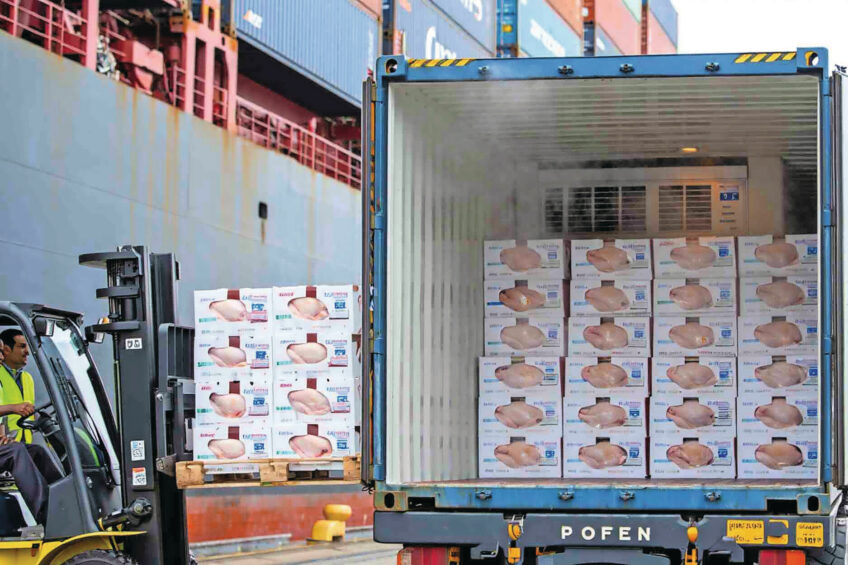
The ongoing military conflict in the Middle East continues rippling far beyond geopolitical headlines and into global poultry markets, with potential repercussions for Polish broiler meat exports, according to local market players.
“There is a risk that Brazil will redirect its exports to other regions of the world, particularly to Asian countries, where it already has a dominant position. This could hinder exports and certainly increase competition with suppliers from European countries, including Poland,” says Wiesław Różański, president of Poland’s Union of Producers and Employers of the Meat Industry (UPEMI).
Parallels with previous disruptions
The expert pointed out that similar situations have occurred in the past in other meat markets. “The situation may be analogous to what happened in Europe’s pig market when Spain, Europe’s largest exporter to China, suffered from high prices and the spread of ASF. Products that could not be exported ended up on the European market, which destabilised it for months,” he explains.
In Brazil, the scenario could be similar. If exports to some Middle Eastern countries are curtailed, Brazilian producers will seek new customers.
Competitive pressure from Brazil
Poland’s poultry industry is concerned that Brazil, as one of the world’s most competitive poultry producers, plays a pivotal role in shaping global price dynamics. Should access to certain Middle Eastern markets become constrained, Brazilian exporters are expected to actively seek alternative destinations. This could lead to increased volumes entering already competitive markets, particularly in Asia and Europe.
“We must remember that Brazilian poultry is more competitively priced, and the desire to recoup losses could further – at least temporarily – drive down prices. If this happens, the impact on producers in Poland and Europe will be inevitable,” Różański emphasised.
According to representatives of the poultry sector, developments should be closely monitored by public administration and institutions responsible for trade policy. Possible shifts in global poultry meat trade flows may quickly translate into greater competition and price pressure on the European market and thus affect the situation of producers in many European Union countries.
Risk of oversupply in the EU
Experts note that the conflict is involving a growing number of countries, many of which are potential markets for Poland – unlike the war in Ukraine, which involves operations within a more limited area.
An additional problem could be a surplus of food on the EU market that cannot reach Arab countries. This could translate into increased internal competition and lower prices, according to Różański.