Brazil confident of regaining permission to export poultry to EU
The European Union (EU) has removed Brazil from the list of countries authorised to export meat and animal products to the bloc. While surprised by the decision, Brazil is confident it will soon regain permission.
The EU’s justification is that Brazil has not provided sufficient guarantees regarding the use of antimicrobial growth promoters. The measure threatens more than US$2 billion in Brazilian agribusiness exports. The development came only a few days after May 1, when the free trade agreement (FTA) between Mercosur and the EU provisionally entered into force.
As a result, Brazil will no longer be allowed to export products such as beef, poultry, pork, eggs, honey and fish products to the EU from September 3.
European Commission health spokesperson Eva Hrnčířová told the Portuguese news agency Lusa that Brazil must ensure compliance with antimicrobial requirements throughout the animals’ entire life cycle in order to be reinstated on the list.
The revised list includes 101 countries, among them the other Mercosur members Argentina, Paraguay and Uruguay.
Seeking a quick resolution
Brazil’s government expects to be able to provide the required technical information swiftly. This would allow the EU to analyse the data and potentially restore Brazil to the list of authorised exporters before the deadline.
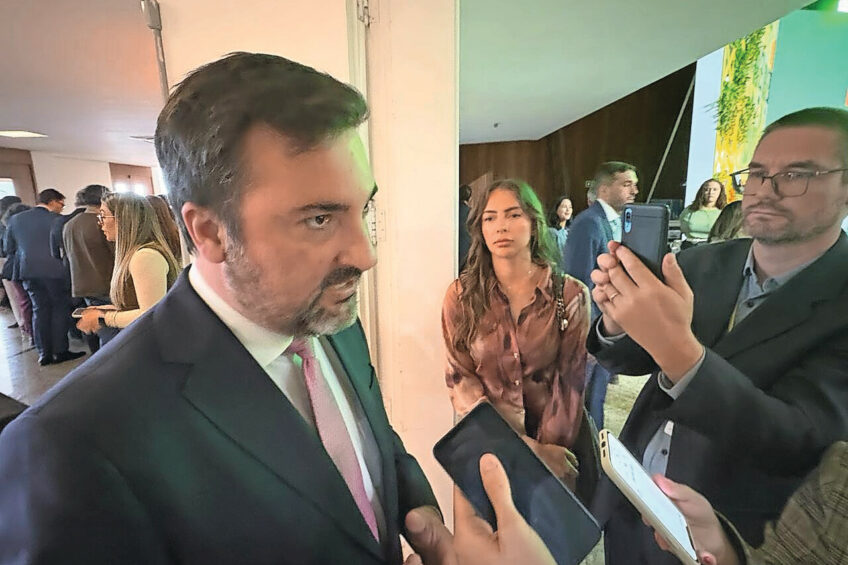
Several prominent Brazilian politicians responded to the EU announcement. Brazil’s vice-president, Geraldo Alckmin, said: “We are confident regarding this EU issue. The technical information will be provided within 15 days. Trade relations remain tense despite the FTA.”
Alckmin said that Brazil’s ambassador to the EU, Pedro Costa e Silva, met with the bloc’s diplomatic representatives the day after the announcement in Brussels. He was informed that technical discussions would take place over the coming weeks.
“Brazil has a solid sanitary system”
André de Paula, minister of agriculture and livestock, said the Brazilian government had been surprised by the EU’s decision. He said: “Brazil has a solid sanitary system. We have been exporting for more than 40 years. We exported yesterday, we export today, and we will export tomorrow.”
“We will take every necessary measure to adapt. We are convinced that we will face this challenge and overcome it,” he added. “Our ambassador said that we are partners, and partnership presupposes partner-like treatment.”
Sector by sector
Luis Rua, Brazil’s secretary of trade and international relations, stated that Brazil had been awaiting EU feedback since October last year regarding protocols for antimicrobial use.
He said: “We have been requesting, since October, a position on whether Brazilian protocols are adequate. We were removed even after raising the issue several times.”
Rua took part in a meeting with the EU ambassador to Brazil, Marian Schuegraf. He said: “We want this to be resolved as quickly as possible, with speed, transparency and on the basis of technical considerations.”
“Different products should be treated differently. Each has its own particularities. These are highly technical issues. We also need to understand exactly what additional requirements the EU is demanding.”
Join 31,000+ subscribers
Subscribe to our newsletter to stay updated about all the need-to-know content in the poultry sector, three times a week.