Dust on eggs: Concerns raised as cases increase across the UK
Dust contamination on free-range eggs has long been an occasional frustration for producers, but over the past winter the problem has escalated to a level that has prompted concern at national level.
The Egg Marketing Inspectorate (EMI) has reported a noticeable rise in dust-related egg hygiene issues across the country, prompting fresh discussions with industry bodies and producers about why the problem is intensifying and what steps can be taken to address it.
More dusty eggs than before
According to the EMI, inspectors have encountered more cases of dusty eggs during routine visits than in previous seasons. They also highlight that the lack of a defined grading category for “dusty eggs” makes it challenging to quantify the true scale of the issue.
As a result, the EMI has been working with the British Free Range Egg Producers Association (BFREPA) to understand producer experience on the ground, with both organisations agreeing that improved monitoring and clearer data will be essential going forward.
Producers have also been reporting a significant rise in dusty eggs, with many attributing it to a combination of extended housing orders, exceptionally dry litter and the way modern free‑range sheds operate.
Farmer notices rise in seconds recorded at grading
Suffolk producer Dan Brown, who manages 64,000 birds across 2 multi‑tier houses, is among those who have seen the issue escalate sharply. Initially, the only sign of a problem was a rise in seconds recorded at grading – climbing from a typical 0.3% to as high as 9%.
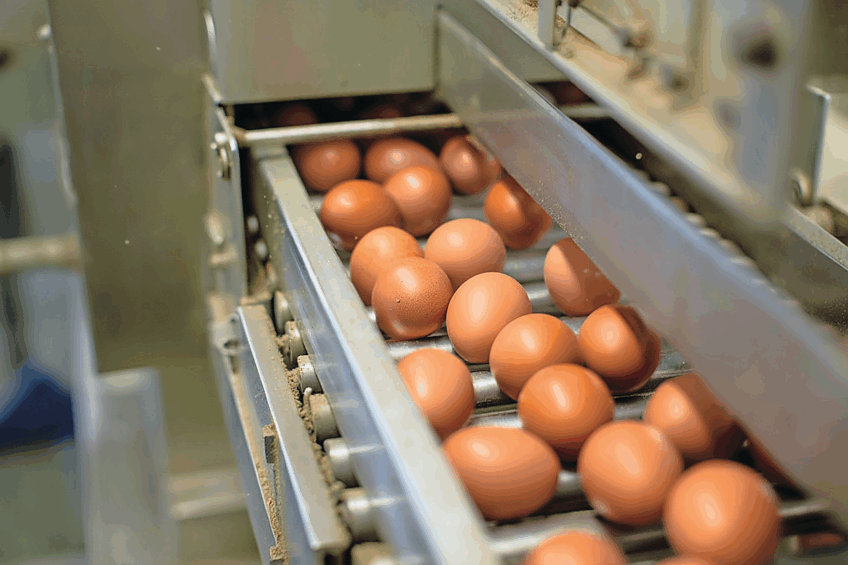
When he inspected the egg belts, he found that fine dust was settling overnight. Freshly laid eggs rolled through this dust while the cuticle was still damp, causing contamination to stick stubbornly to the shell.
Housing order in the UK
The winter housing order played a major role. With birds unable to access the range, every dust bath took place inside the shed. At the same time, litter remained extremely dry – ideal from a welfare perspective, but conditions that increase airborne particulate matter.
This dust eventually settles on equipment, particularly egg belts, transfer points and nest boxes. Without proactive management, a minor build‑up can quickly become a grading headache.
Ventilation in sheds
Airflow within sheds also has a major effect on dust accumulation. Brown operates 2 contrasting buildings: one ventilated mechanically through equal‑pressure turrets, the other a naturally ventilated flat‑deck structure later converted to multi‑tier.
In the older building, limited airflow beneath the tiers created a still‑air zone where fine dust accumulated and hung visibly in the air. This dust settled readily on belts and supporting equipment, increasing the likelihood of egg contamination.
External conditions
External conditions add further complexity. On light soils, birds quickly expose dry earth, especially during prolonged dry spells. This loose soil is easily carried back indoors on feet and feathers, adding to internal dust levels. Last autumn, Brown experienced what he described as a “perfect storm” of dry litter, low airflow and dusty range conditions that pushed contamination levels sharply upwards.
Many producers have refined their management practices to reduce the risk. Several now run egg belts earlier in the flock cycle – sometimes from week 16 or 17 – to prevent dust accumulating before lay begins. Others blow down belts before first use or run belts overnight to clear dust before the morning laying period. Some producers have installed small directional fans aimed at belts to keep them cleaner during operation.
High‑pressure misting system as a solution
The solution that proved most effective for Brown’s unit was the installation of a high‑pressure misting system. The system runs for 1 minute every half hour, releasing a very fine mist that binds airborne dust particles and causes them to fall without wetting litter or creating damp conditions. While there were initial concerns about how birds would react, the flock adapted quickly. Once installed, grading returns improved almost immediately, with dirties falling back to around 0.3-0.7% – levels considered normal for well‑managed production.
Bacteria can compromise hygiene
Dust contamination is not only a cosmetic issue. Dust may contain dried manure, litter particles, feed fragments and soil, all of which can harbour bacteria. When this material adheres to the shell, it may compromise hygiene. That is why belt cleanliness, nest hygiene, machinery maintenance and regular monitoring remain essential.
A UK-wide concern
The EMI’s recent engagement with BFREPA underlines that dusty eggs are now a national concern. While there is no single cause, the combination of dry litter, indoor dust bathing, ventilation patterns, dust accumulation on belts and external soil conditions are all contributing factors.
Close monitoring and solutions
Just as the causes vary, so do the solutions. Improved belt management may be sufficient in some sheds; others may require airflow adjustments or investment in misting or dust‑suppression systems.
One of the key lessons emerging from recent experiences is the importance of closely monitoring grading reports. Dust contamination tends to creep up gradually. Producers who do not review returns regularly risk missing early signs, only discovering the issue once seconds spike or packers raise concerns.
For now, the EMI is encouraging producers to maintain strong dialogue with their packers to better understand their own levels of dust‑related seconds. With no dedicated grading category for dusty eggs, this communication is critical, particularly in early lay when dust‑related issues can have a disproportionate impact.
What is clear is that early recognition and swift action make a measurable difference. As Dan Brown’s experience shows, once the root cause is identified, practical changes can bring grading performance back under control quickly. With producers, BFREPA and the EMI now working more closely together, the industry is better placed than ever to manage dust contamination – and to ensure that egg quality remains consistently high.
Join 31,000+ subscribers
Subscribe to our newsletter to stay updated about all the need-to-know content in the poultry sector, three times a week.