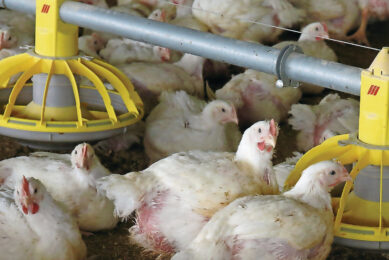
China and Russia move towards joint ventures in poultry breeding

China and Russia have taken fresh steps to deepen cooperation in poultry breeding, signing a set of agreements that could eventually lead to the establishment of joint ventures in genetics and breeding technologies.
Several leading Russian and Chinese agricultural research institutions, together with the Russian National Poultry Farmers Union, have signed an agreement to establish a joint scientific genetics and breeding platform focused on poultry. According to Russia’s Ministry of Agriculture, the platform is intended to facilitate research collaboration and knowledge exchange between the countries, although few operational details have so far been disclosed.
Broiler chicken crossbreeding programme
In parallel, a separate memorandum of cooperation was signed between Russia’s GenBioTech – a Kazan-based breeding company – and Beijing Glbizzia Biotechnology of China.
Under the agreement, the companies plan to cooperate on a broiler chicken crossbreeding programme, with a focus on optimising breeding processes, improving disease prevention and extending the productive lifespan of birds.
Strengthen domestic genetic capabilities
Russian media reported that the newly-signed agreements could pave the way for the creation of joint ventures in poultry breeding, particularly as both countries are seeking to strengthen domestic genetic capabilities and reduce reliance on imported breeding material.
The agreements were signed during a visit by a delegation from Russia’s Ministry of Agriculture to China, the ministry said in a statement released on 31 January. Joint initiatives and projects in poultry breeding will make Russian-Chinese cooperation “even more effective, opening new opportunities for strengthening the two countries’ scientific and technological potential,” Olga Abramova, adviser to Russia’s agriculture minister, was quoted as saying.
Domestic genetics
Both China and Russia have placed growing emphasis on the development of their domestic poultry breeding industries in recent years, driven by food security concerns, geopolitical tensions and supply-chain risks.
China has made particularly rapid progress. National research institutions and breeding companies have introduced genomic-based selection systems and developed new high-yield layer lines and white-feather broiler breeds, including Shengze 901, Guangming No. 2 and Wode 188, since 2021. As a result, domestic genetics now play a much more prominent role in China’s poultry sector. Some locally developed layer lines are estimated to account for around 60% of the domestic egg-laying market, while several Chinese broiler crossbreeds have gained increasing acceptance among producers.
Smena-9 and Russia’s import-substitution strategy
In Russia, efforts to reduce dependence on imported poultry genetics are closely linked to the Smena-9 broiler crossbreed. Developed by Russian scientists and officially registered for commercial use in 2020, Smena-9 has been positioned as a cornerstone of the country’s import-substitution strategy.
By 2025, Smena-9’s share of Russian poultry production reportedly exceeded 5%, and authorities have outlined plans to increase this figure to around 20% by the end of the decade. However, industry sources and occasional media reports suggest that the crossbreed is still associated with somewhat lower efficiency compared with established international strains, making some of Russia’s largest poultry producers reluctant to switch on a large scale.
Join 31,000+ subscribers
Subscribe to our newsletter to stay updated about all the need-to-know content in the poultry sector, three times a week.