UK: Major chains move from Better Chicken Commitment to Sustainable Chicken Forum
Several of the UK’s most recognisable restaurant groups have withdrawn from the Better Chicken Commitment, choosing instead to join the newly-formed Sustainable Chicken Forum amid increasing pressure on poultry supply, welfare demands, and environmental targets.
The move marks a significant shift in the hospitality sector’s approach to broiler welfare and sustainability, with implications for both producers and consumers.
A total of 8 businesses representing 18 major high-street brands, including KFC, Nando’s, Burger King, Popeyes, Wingstop, and Wagamama, have stepped away from the Better Chicken Commitment, an initiative that requires participating companies to move to slower-growing breeds and meet enhanced welfare criteria. Instead, they have aligned with the Sustainable Chicken Forum, an industry-led forum designed to support what they describe as more practical and science-led welfare improvements without mandating a breed change.
A balancing act for the poultry supply chain
According to UKHospitality CEO Allen Simpson, the decision reflects the complex balancing act facing both operators and their supply chains. With demand for chicken rising sharply, the sector is under acute pressure to maintain consistent supply while keeping pace with sustainability regulations and consumer expectations.
Simpson stressed that business members “remain committed to enhancing their ongoing work across welfare and the environment” and view the Sustainable Chicken Forum as a vehicle for “evidence-based, sector-wide progress”.
A focus on welfare outcomes
The Sustainable Chicken Forum aims to focus on welfare outcomes rather than prescribing specific production systems. Its priorities include:
- driving continuous welfare improvements
- developing common reporting mechanisms
- advancing research into environmental and welfare challenges
- working with policymakers to support a robust British poultry supply chain.
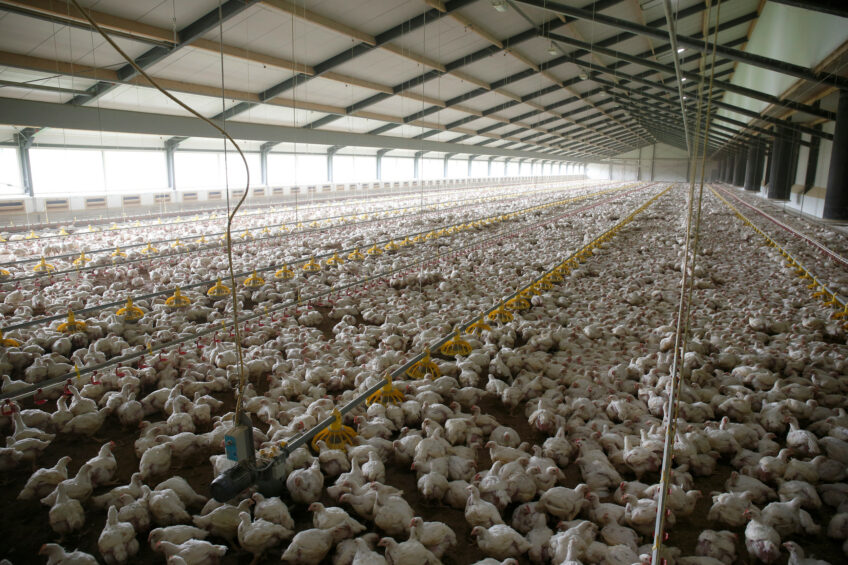
In particular, the group argues that slower-growing breeds, though often promoted as higher-welfare, require more feed and resources, resulting in greater greenhouse gas emissions.
This argument has been supported by some sector experts. Poultry veterinarian Adrian Knoetze warned that focusing solely on breed overlooks other key welfare determinants such as shed conditions, stockmanship, and training. He argued: “Everyone wants to see broiler welfare continue to improve, but this needs to be done in a manner that does not risk the sustainability of farms, the environment and businesses.”
Similarly, poultry consultant Reg Smith highlighted the resource intensity of slower-growing breeds, stressing that welfare gains can be achieved with modern fast-growing strains when well-managed.
Multiple pressure points for the poultry sector
Others in the agricultural sustainability field have welcomed the broader-system approach proposed by the Sustainable Chicken Forum. Dr Louise Manning, agri-food supply chain expert emphasised that the sector must navigate multiple pressures, including food security, environmental obligations, and the need for consistent supply, making evidence-based leadership critical.
Zero Carbon Forum director Bob Gordon echoed this view, pointing to the hospitality sector’s success in reducing emissions in other supply chains and stating that the Sustainable Chicken Forum’s ambition to decouple welfare improvements from higher emissions is both necessary and achievable.
Disappointment from animal welfare organisations
However, the withdrawal from the Better Chicken Commitment has been met with strong criticism from animal welfare organisation Compassion in World Farming (CIWF). The group described the development as “deeply disappointing”, arguing that breed change remains essential if welfare improvements such as reduced stocking density and natural light provision are to deliver meaningful benefits. CIWF maintains that slower-growing breeds experience fewer health and mobility issues and that many claims about their environmental drawbacks fail to account for broader socio-economic and ecological benefits.
The organisation also pointed out that Better Chicken Commitment-compliant chicken is already available in the UK retail sector, with supply expected to grow as retailers like Marks & Spencer expand their offerings. In its recent Animal Welfare Strategy, the UK government signalled support for moving away from fast-growing breeds, and Norway has already committed to phasing them out entirely. CIWF argues that the foodservice sector should be building on the “meaningful progress” already made rather than reversing course.
CIWF said it has offered timeline extensions to help businesses meet Better Chicken Commitment requirements, acknowledging the operational challenges involved. But it warned that stepping away from breed change undermined welfare ambitions: “Failing to address breed means failing the animals – it is not ethical to breed chickens in a way that makes them suffer.”
Meaningful change
The divergence between industry and animal welfare groups highlights the complexity of broiler production in 2026. On one side, hospitality operators face rising demand, tight margins, and pressure to decarbonise. On the other, campaigners argue that consumer expectations for higher welfare remain strong and that meaningful change requires moving beyond minimal welfare improvements.
As the Sustainable Chicken Forum begins its work, the poultry sector will be watching closely to see whether its outcome-based model can deliver credible welfare gains while maintaining sustainability and supply resilience. For producers supplying both Better Chicken Commitment-aligned retailers and Sustainable Chicken Forum-aligned restaurant groups, the dual-track system may mean navigating differing expectations and audit frameworks.
What is clear is that chicken, the UK’s most consumed meat, sits at the centre of an increasingly complex debate on welfare, climate responsibility, and long-term food security. The decisions made today – by policymakers, producers, and food businesses – will shape the future of the broiler sector for years to come.
Join 31,000+ subscribers
Subscribe to our newsletter to stay updated about all the need-to-know content in the poultry sector, three times a week.