The EU-Mercosur treaty: Why are EU farmers concerned?
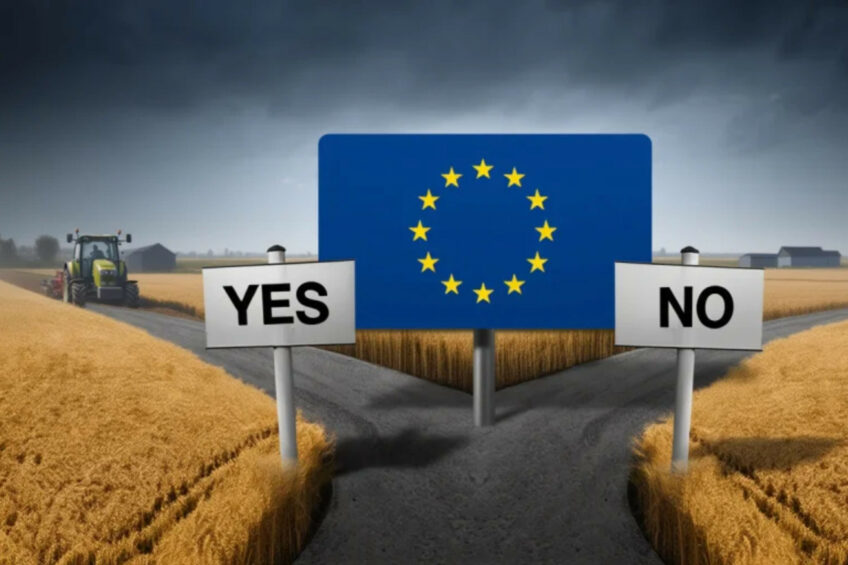
On 9 January, a majority of European Union (EU) member states approved the trade agreement with Mercosur, a bloc consisting of various Latin American countries. Farmers in many European countries continue to fiercely protest the deal. Why is there a problem for Europe’s farmers?
In general, the trade agreement by the EU with the Latin American Mercosur countries, namely Brazil, Argentina, Uruguay and Paraguay, focuses on eliminating as many import duties as possible, and thus to increase trade between the blocs. A 5th Mercosur member, Bolivia, may join the deal in the years to come. Import duties will be largely phased out for machinery and equipment, and for chemicals and pharmaceuticals, for example.
A planned deal was announced in 2019 after 20 years of negotiations. Late in 2024, the agreement was formally announced. What still needed to happen was ratification by a majority of the member states. That happened in January 2026.
Major concern for European farmers
The deal has been a major concern for European farmers for years. Producers throughout Europe fear significant pressure on the European market for meat and sugar, among other things, due to cheaper imports from Latin America.
European agricultural organisations have stated that this is unfair competition, because farmers in those countries do not have to comply with the same regulations as European farmers, for example, regarding animal welfare and the use of pesticides.
Quotas built up over 5 years
Agriculture has been designated as a “sensitive sector” in the negotiations on the EU-Mercosur agreement. As a result, quotas have been agreed upon for several products. That does not mean, however, that the volumes of these quotas will immediately be released onto the market next year; the quotas will be built up gradually, usually over a period of 5 years.
There are different perspectives on these quotas. The EU generally emphasises the totals being a percentage compared to total European production, which often seems relatively small. European producers, however, tend to make a different kind of calculation and point to a cumulative effect of all those agreements together.
Poultry meat and eggs
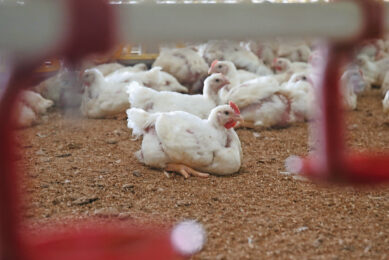
A levy-free quota of 180,000 tonnes has been set for poultry meat, equivalent to 1.3% of total European production per year, said the European Commission.
The European poultry organisation Avec, however, put the quota in a different perspective, stating that 9% of the poultry consumed in the EU will soon be imported. Even now, even without Mercosur, more than 25% of the breast fillet consumed by Europeans comes from non-EU countries, Avec said.
Beef and pork
In the deal, Mercosur countries will ultimately be allowed to import 99,000 tonnes of beef at a reduced tariff. That would represent 1.5% of total European production, according to the EU. Impact calculations by Wageningen University & Research (WUR) stated that Mercosur’s impact on beef production in the Netherlands is greatest. The calculation suggests that the production value of beef in the Netherlands would be 15.6% lower by 2040.
For pork, a quota of 25,000 tonnes has been allocated that is subject to a reduced tariff. This equates to 0.1% of total European production.
Eggs duty-free under certain conditions
A special agreement has been made in Mercosur regarding eggs. Other products must meet European food safety requirements. For example, residues exceeding European standards must not be found on these products. An additional requirement applies to fresh eggs: they may only be imported duty-free if production also complies with European animal welfare regulations for laying hens.
That is unique; animal welfare regulations are normally not considered in free trade agreements. At the same time, the requirement is only stipulated for fresh eggs, not the most controversial part of the agreement.
At the last minute, a “safety mechanism” was added in autumn 2025 autumn to protect the European market. The idea is that if there are significant price fluctuations as a result of additional imports from Mercosur, Europe can intervene. Agricultural organisations, however, believe this is insufficient.
European regional product names
Part of the agreement with Mercosur countries also includes the official protection of many European regional product names in South American countries. Imitations of these names will then be prohibited.
What will happen next?
On the European side, the trade deal with the Latin American bloc Mercosur has still not been fully approved, and just recently the European Parliament decided that the European Court of Justice must first review the trade agreement. This will likely lead to a delay.