Poultry shows positive results on waste and marketing standards
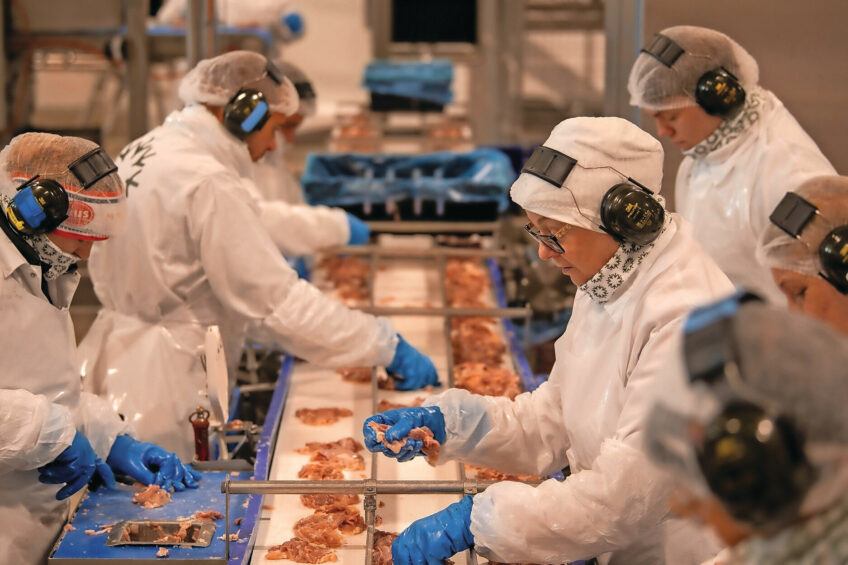
When food waste makes headlines, poultry is rarely the sector in focus. Other products, like fruit and vegetables, usually attract more attention – partly because losses and waste are easier to see and often far higher. That is why the poultry findings from the Horizon Europe BREADCRUMB project are worth noting. Its conclusion is that, in delivering a product to the desired marketing standard, a very low percentage of poultry meat goes to waste.
Project BREADCRUMB gives the poultry sector something it does not often have in these debates: a cross-commodity benchmark on how food marketing standards can affect waste across different food chains. It examines the relationship between food marketing standards—rules defining product classification and market presentation—and food waste across five commodity groups: fruit and vegetables, meat, eggs, cereals, and fish.
In practice, it looks at how standards and related market requirements influence whether food reaches its intended outlet or is redirected into a lower-value use instead. Within that work, AVEC led the poultry case study, covering whole chicken, breast fillet, legs, and processed products across the main stages of the chain.
Low levels
The poultry findings are clear. Estimated waste linked to marketing standards was around 1% for whole chicken, 0.3% for breast fillet, 0.6% for legs, and 0.1% for processed products. These are low levels, especially when viewed against the wider BREADCRUMB benchmark.
In the same research, slaughtered pig carcasses were estimated at 8.7%, whole beef at 12.5%, and eggs in processing at 6.8%. In fruit and vegetables, some cases were higher still, including persimmons at 22.5% at the primary stage of production. Seen in that context, poultry sits clearly among the best-performing commodities in the project.
Why marketing standards still matter
That matters for a sector expected to deliver on both efficiency and sustainability. As Birthe Steenberg, secretary general of AVEC, puts it: “Poultry is already doing much of what wider food system debates increasingly demand: keeping losses low while making the most of edible product.”
It also fits the reality of the business. Poultry is a high-volume chain built around planning, tight specifications, and value recovery, with less exposure than some other sectors to the kind of slippage that can happen when appearance, seasonality, or shelf life quickly push products out of market. In that sense, the BREADCRUMB benchmark confirms a broader point: marketing standards are not driving major waste in poultry in the way they can in some other commodities.
Downgrading and value use
Even so, the case study does point to one detail worth noting: whole chicken recorded the highest share within the poultry categories, which is a reminder that whole birds leave less room for flexibility when a product falls outside the exact specification of the market it was meant for. That does not change the broader picture, but it does show where marketing standards and classification requirements can still lead to downgrading.
“What we see in poultry is not large-scale loss, but rather downgrading when products no longer fit their intended market, leading to lower-value uses rather than waste,” Steenberg explains.
The wider meat findings show what that can mean in practice: suboptimal products were often sold at a lower price (58%), while others were redirected into animal food production (16%), feed (54%), or waste (45%). In other words, the issue is not so much large-scale loss as a lower-value outcome when products can no longer follow their original route to market.
Confirmation of strong waste performance
For poultry professionals, that is probably the main value of the BREADCRUMB work. It confirms with data poultry’s strong waste performance. At the same time, it gives a more precise picture of where marketing standards may still offer scope to further optimise product use, by limiting downgrading and helping maximise the value of the poultry meat produced.
As future discussions on standards, sustainability, and resource use continue, that leaves poultry in a useful position: low losses, efficient product use, strong comparative performance, and a firmer evidence base to show it.