Poultry farmers protest Egypt’s decision to open doors to imports
Representatives of Egypt’s poultry industry have sharply criticised the government’s decision to greenlight poultry imports, warning that the move, which aims to curb food prices ahead of Ramadan, could undermine the sector’s stability.
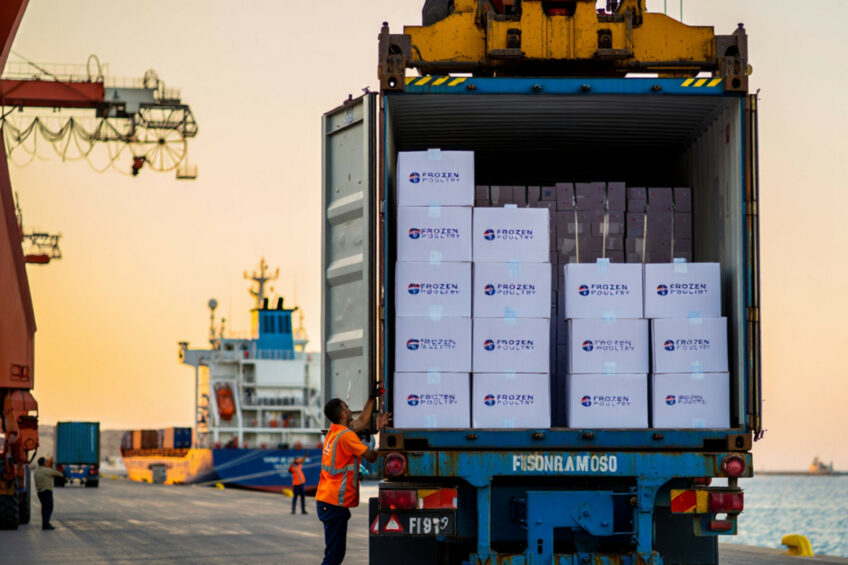
Egypt will import large quantities of frozen poultry and poultry parts from several countries to boost market supply and lower consumer prices, according to a joint statement issued by the Agriculture Ministry and the Supply Ministry on 8 February.
The imports, including whole birds, thighs, and breasts, will be sold to consumers at discounted prices through the country’s state-run retail network, the government said. The statement did not specify the countries of origin, though local media reports suggest that supplies will primarily come from Europe and Brazil.
An immediate backlash
The announcement immediately drew backlash from domestic producers. Tharwat El-Zeiny, vice president of Egypt’s Poultry Union, warned that facilitating poultry imports makes little economic sense, arguing that the country is largely self-sufficient in broiler meat production.
“Egypt is not only meeting its domestic demand for poultry, but also has a surplus that allows for exports. There is no meaning, no logic behind allowing poultry imports,” El-Zeiny said.
Rising poultry prices have been cited as the main reason for the government’s decision. However, El-Zeiny stressed that recent price increases were not driven by supply shortages, but rather by broader macroeconomic factors, including fluctuations in the exchange rate of the Egyptian pound.
Islamic traditions
Several local businesses also voiced concerns over the potential import of poultry not produced and slaughtered in accordance with Islamic traditions.
El-Zeiny suggested that the government may focus on importing specific products, such as thighs, which tend to be in lower demand in Western markets. He also acknowledged that ensuring imported poultry complies with Islamic slaughter standards could prove challenging, as many exporting countries use electric stunning or gas methods.
At the same time, he noted that part of the imports could consist of offal intended primarily for processing into animal feed rather than for direct human consumption.
Egypt has largely refrained from allowing poultry parts imports since the 1980s in an effort to protect the domestic industry, he added.