Moldova bans Ukrainian poultry, citing safety concerns
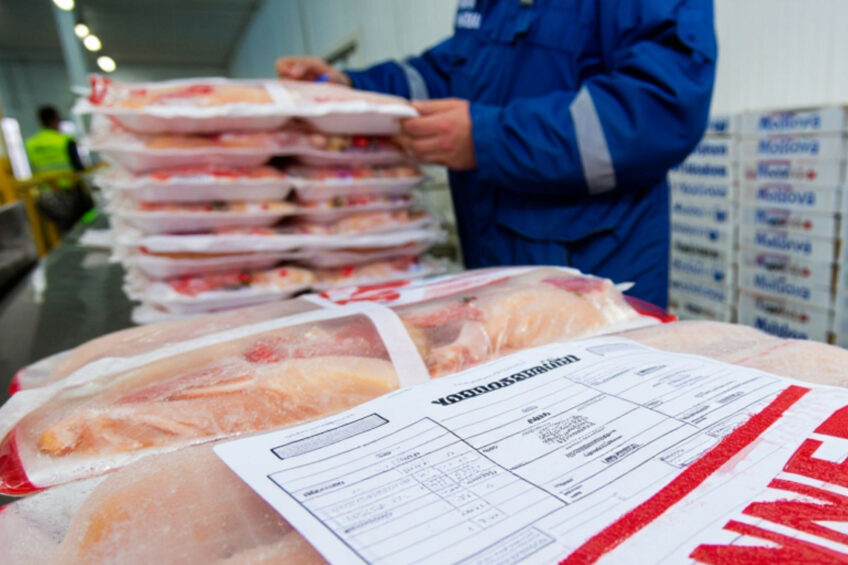
The Moldovan state veterinary watchdog, ANSA, has imposed a ban on poultry imports from Ukraine after traces of metronidazole were found in a batch of delivered products, reportedly feed.
The restrictions came into effect on 26 January, with “deficiencies in the exporting country’s veterinary drug certification and control system” noted as an official reason. ANSA emphasised that it could not consider the Ukrainian safety guarantees sufficient.
ANSA has not specified when or how many batches were found to be contaminated. The regulator only stated that Ukrainian testing methods for residues of such substances in food products do not comply with Moldovan standards.
No safety guarantees for Ukrainian poultry imports
Ukrainian tests only analyse muscle tissue, not blood serum, despite scientific studies showing that metronidazole is rapidly broken down in muscle but remains stable in blood and eggs.
“Considering the identified deficiencies in the exporting country’s certification system, as well as gaps in veterinary drug control mechanisms, ANSA believes that it is currently impossible to provide sufficient guarantees for the safety of poultry imported from Ukraine, even with veterinary certificates,” the regulator said.
Ukrainian veterinary law prohibits the use of metronidazole in meat and other food production, but an ANSA investigation found that the drug is freely available on the market – it can reportedly be purchased in Ukraine online, without a prescription, and without proper monitoring of its use.
Food importers challenge the ban
Moldovan food importers spoke against the decision. Anatoly Tretyak, director of MMD Group, a prominent chicken supplier, stated that metronidazole has never been found in Ukrainian chicken. He also suggested that if any producer violated the regulations, the punishment should be individual.
“There is no traceability confirmation that feed possibly containing metronidazole reached any Ukrainian enterprises exporting to Moldova…”
Following the ban, Moldovan supermarket chains began refusing to accept Ukrainian poultry already imported into the country.
“There is no traceability confirmation that feed possibly containing metronidazole reached any Ukrainian enterprises exporting to Moldova. The discrepancy is confirmed by an expert report, which is not publicly available,” said Vitaly Grabovsky, head of the Moldovan Association of Meat Importers.
Importers and producers claim there is no laboratory confirmation of metronidazole in meat supplied to Moldova. In the cases cited by ANSA, the substance was detected in feed, not in finished products, late last year.
No turnaround
However, ANSA remains adamant in its resolution to keep the restriction in place. “We can’t check each importer individually. We’ve identified deficiencies in the overall control system of the competent authorities [of Ukraine] that issue permits for exports to the Republic of Moldova. Therefore, we require an official notification from the competent authority so that we can receive all the necessary guarantees,” ANSA said in response to the claims.