Manure and sustainability: Turning manure into a useful fertiliser
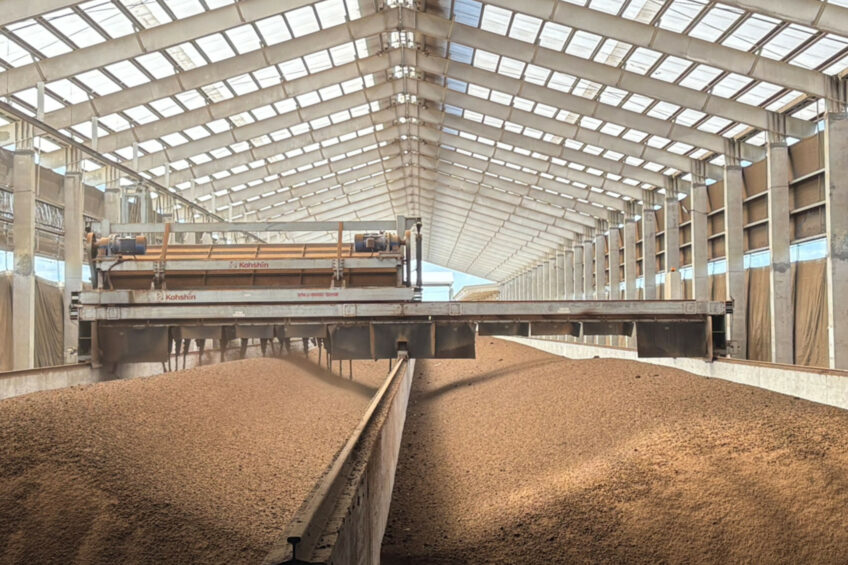
Poultry farms today operate under increasing pressure. Environmental regulations are tightening, public expectations are rising, and farms are expected to reduce their environmental footprint while remaining efficient and productive. In this situation, manure is often seen as a problem that must be removed as quickly as possible. But what if this perception could change?
At Kohshin Engineering in Japan, we work with poultry farms facing these challenges and focus on treatment approaches that allow manure to become a stable, useful fertiliser rather than a burden.
What is “sustainable manure treatment”?
Sustainable manure treatment means managing manure so that it becomes safe, predictable, and beneficial once applied to soil. The true measure of sustainability is not only how manure is processed, but how it behaves in the field.
A sustainable process produces a final product that does not harm plants or soil organisms and delivers consistent results over time. In other words, sustainability is determined after application and not at the treatment stage.
Poultry manure as a potential fertiliser
Poultry manure naturally contains essential plant nutrients such as nitrogen (N), phosphorus (P), and potassium (K), as well as organic matter. Whether these components become a benefit or a risk depends entirely on how the manure is treated.
Biological activity is the deciding factor. When microorganisms are provided with suitable conditions, they transform raw manure into a more stable material. This biological transformation reduces unwanted soil reactions and allows nutrients to be released in a more controlled way. Without it, manure remains unstable and its effects in soil are difficult to predict.
What is required for sustainable treatment?
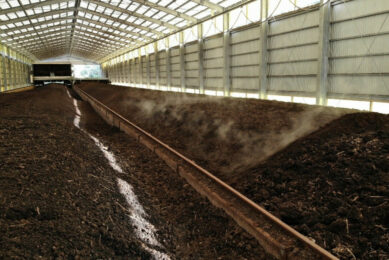
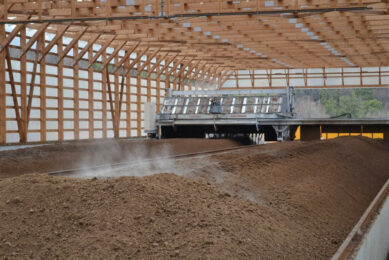
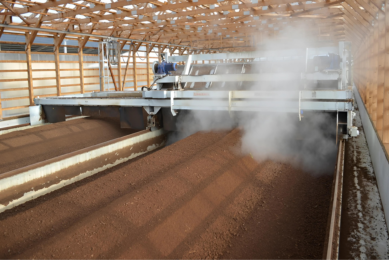
For biological transformation to occur, microorganisms must be able to work efficiently. This requires sufficient treatment time, oxygen for aerobic activity, and appropriate moisture levels. As microbial respiration increases, heat is generated naturally. In a stable aerobic process, temperatures rise and remain high enough to support hygienic effects, including the reduction of pathogens.
At the same time, it is important to allow the composting process to progress through all its biological stages, as different groups of microorganisms dominate at different stages and each contributes in a specific way to the quality of the final product.
Biological treatment versus physical processing
There is a clear difference between biological treatment and physical processing. Physical methods such as drying or pelletising mainly change the form of manure making it easier to handle. However, these methods do not focus on biological stabilisation. Even if drying takes time, it does not allow aerobic microorganisms to properly transform organic matter. As a result, the manure may remain biologically active once applied to soil, leading to uneven nutrient release or stress on plants and soil organisms.
Why compost maturity matters for soil and plants

When insufficiently treated manure is applied to soil, organic matter continues to decompose rapidly. Soil microorganisms consume large amounts of oxygen during this process. As oxygen levels fall, anaerobic conditions develop.
Plant roots also require oxygen to function, so anaerobic soil conditions directly harm plant growth. In the absence of oxygen, microorganisms shift to anaerobic respiration, producing compounds such as hydrogen sulphide (H₂S), which damages roots and causes unpleasant odours.
Anaerobic conditions also promote denitrification. Nitrate nitrogen (NO₃⁻) is converted into nitrogen gas (N₂) and lost to the atmosphere. As a result, valuable nitrogen is lost instead of being used by crops.
Why aerobic composting works best
Aerobic composting supports controlled biological activity and allows nutrients to be converted into stable forms. Mature compost behaves very differently in soil compared to untreated, dried, or pelletised manure. Nutrients are released gradually, better matching plant uptake and reducing the risk of crop stress, burning, or nutrient loss.
During aerobic composting, microbial activity naturally raises temperatures above 60°C. These temperatures help inactivate pathogenic microorganisms, weed seeds, and harmful insect eggs.
Over time, soils treated with mature compost become more resilient. Nutrient efficiency improves, soil structure stabilises, and crop performance becomes more consistent. These benefits develop gradually, making aerobic composting a long-term foundation for sustainable fertiliser use rather than a short-term solution.

Sustainability beyond the farm
Manure sustainability is not about choosing the fastest or simplest method. It is about choosing a process that delivers reliable performance in the field.
When manure is treated through controlled aerobic processes, it becomes a resource rather than a burden. True sustainability is measured not by processing speed, but by how safely and effectively manure supports agriculture over the long term.
Based on these principles, Kohshin Engineering designs manure treatment systems that support stable aerobic composting. True sustainability is not measured by how quickly manure is processed, but by how well it supports healthy soil and farming systems over time.