Iraq bans poultry imports to support farmers
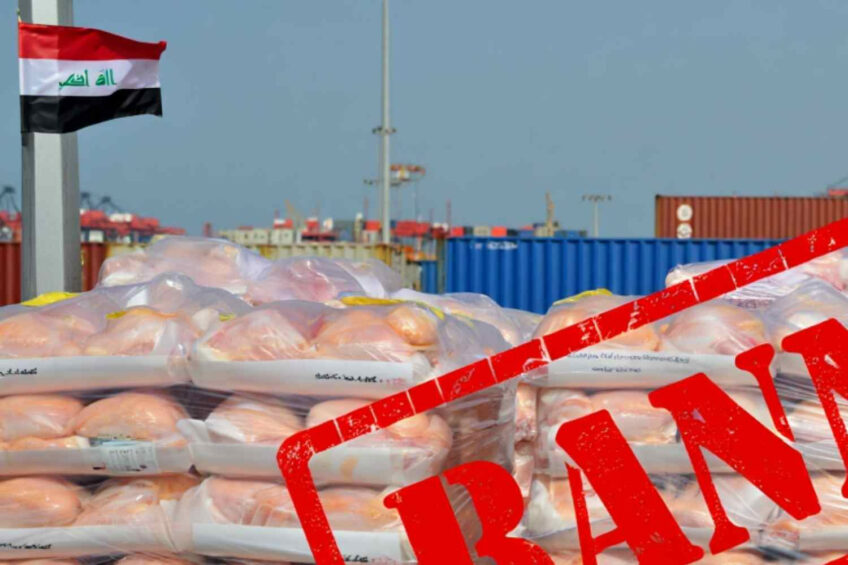
Iraq has announced a temporary ban on poultry imports effective today, January 15th 2026. The move is intended to give local breeders further impetus for development, despite fears over rising prices in the run-up to Ramadan.
The number of registered poultry farms in Iraq has reached 1,200, distributed across Baghdad and several other governorates, the Ministry of Agriculture said, adding that this figure doesn’t include the Kurdistan region, where substantial poultry production capacity is also concentrated.
Iraq’s poultry industry now comprises various farms, including those that produce broiler meat, eggs, and chicks. Based on this well-developed production base, the Ministry said, the industry can significantly enhance the national self-sufficiency in poultry products.
Reviving the country’s poultry industry
In a statement, Iraq’s Ministry of Agriculture described the ban as “one of the most effective tools available to support poultry farmers”.
Mahdi Al-Jubouri, the Ministry’s Administrative Undersecretary, indicated that protecting local farmers is one of the key pillars for reviving the country’s poultry industry, which has sustained significant damage over the years of armed conflict and uncertainty.
According to Al-Jubouri, there are thousands of different poultry projects in Iraq, and a large number of citizens have had their lives ruined by the loss of their farms in recent years. “The decision [to ban poultry imports] should help restart these projects and revitalise the production cycle,” Al-Jubouri said.
Iraq is the world’s 9th-largest poultry meat importer, with imports valued at US$808 million in 2024, according to the Observatory of Economic Complexity. Iraq imports poultry from Brazil, Turkey, and the United States.
Systemic solutions needed
At the same time, the poultry import ban sparked concerns over food inflation, especially during Ramadan, when protein consumption increases.
Aboutmsr, a local news outlet, said that market experts called on authorities to consider more systemic solutions, such as providing direct support to poultry farmers to narrow the price gap between domestic and imported chicken. In addition, observers called on authorities to ensure a steady flow of feed additives and vaccines necessary for poultry farmers to keep their businesses running.
Strengthening market control and the safety of poultry products along the value chain is also suggested as one of the measures aimed at helping the industry.