UK egg sector’s ageing sheds and new-build slowdown
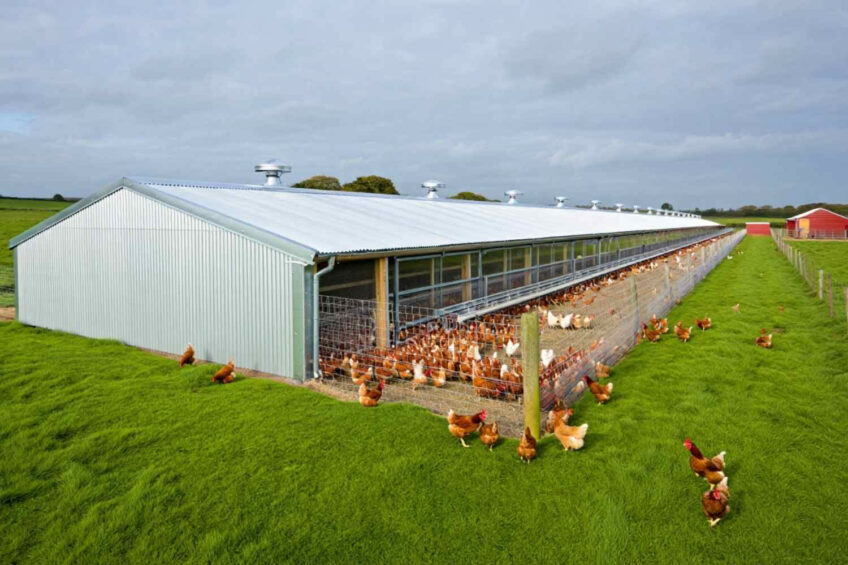
Supply chain and planning issues are beginning to affect the UK’s egg sector, according to the first UK-wide layer hen housing survey.
The survey of laying hen, pullet rearing and breeding sheds, carried out by the National Farmers’ Union, found a sector heavily reliant on ageing infrastructure and facing a sharp slowdown in new buildings.
Modelled on previous NFU broiler shed age surveys, it gathered information from members on the years sheds were built, production systems, and major refurbishments or conversions, providing a regional analysis.
Survey data on laying hens
The survey took place in May and June 2025 and captured data from 1,271 sheds with a capacity of 23 million birds. Among the key takeaways were:
- The average age of the laying hen sheds in the UK was 17 years old.
- Nearly 19% of laying hen sheds were more than 25 years old.
- 20% of sheds currently in production had undergone a major refurbishment (excluding conversion to multi-tier).
- On average, each multi-tier system housed 18,747 hens compared to 9,323 hens in an average flat deck shed.
- Wales had the youngest shed estate with an average age of 9 years, followed by Scotland (12), Northern Ireland (18) and England (19).
In the free-range sector, multi-tier systems dominate, representing 56% of sheds (housing 73% of laying hens) with an average age of 12 years. Flat-deck systems account for 42% of sheds (25% of hens) and average 22 years old, while 7% of multi-tier sheds were converted from prior flat-deck sites about 7 years ago on average. Mobile units comprise the remaining 2% of sheds but house just 0.3% of hens due to their smaller capacity.
In terms of capacity, multi-tier sheds represented 73% of the free-range flock and flat deck units the remaining 27%.
Enriched colony cage sheds were the oldest production system by a significant margin, with an average age of 27 years, and an average of 16 years since the last major refurbishment.
Building of layer sheds
In terms of layer shed building, the busiest 5-year period was 2016-2020 when 206 sheds were built across the UK with a total capacity of 3.45 million hens. But in the last 5 years this fell back to just 120 sheds built, a drop of 40%. This correlates with a challenging period for the egg sector, where poor returns and low confidence resulted in farmers coming out of production and a temporary decline in the national laying flock.
It could also be indicative of an increasingly difficult planning landscape, particularly in sensitive water catchment areas.
Pullet rearing and breeding
- The average age of pullet rearing sheds in the UK was 38 years old, with 55% of sheds built more than 40 years ago.
- 22% of pullet rearing sheds had been refurbished, with an average of 11 years since the most recent major refurbishment.
- The average age of breeder sheds was 37 years old, with 51% built more than 40 years ago.
- 52% of breeder sheds had been refurbished with an average of 24 years since the last major refurbishment.
- England had the older pullet rearing (40 years old) and breeding (39 years old) sheds, with Scotland having the youngest pullet rearing (19 years old) and Wales the youngest breeding (12 years old) sheds.
Between 2020 and 2025, new building construction fell by 40% compared to the previous 5-year period. The union warned that if this continued, UK egg production may struggle to meet growing consumer demand for high quality and affordable protein.
The right tools, and confidence for investments
NFU poultry board chair Will Raw said the sector needed the right tools and confidence to invest : “British egg producers have weathered an exceptionally difficult few years, and while demand for British eggs continues to grow, the slowdown in new housing development is a warning sign we cannot ignore.
“Farmers want to modernise, expand and future-proof their businesses, but they need a planning system that works and a supply chain that delivers fair, sustainable returns,” said Raw. “This data strengthens our case for both, and we support responsible expansion in the sector which helps meet the public’s growing desire for affordable, versatile and nutritious source of protein which eggs provide.”
Join 31,000+ subscribers
Subscribe to our newsletter to stay updated about all the need-to-know content in the poultry sector, three times a week.