Belarus aims for self-sufficiency in poultry genetics
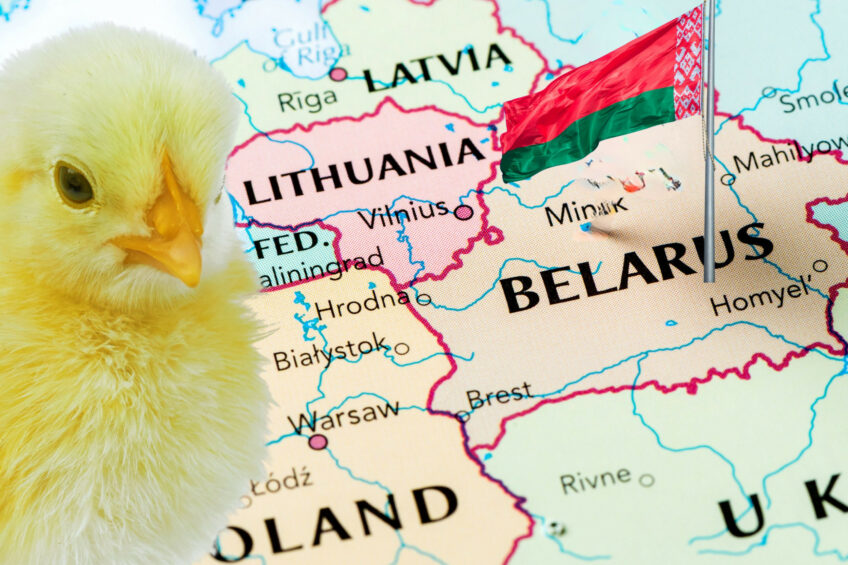
Belarus expects to walk away from imported genetics in poultry farming in the next 5-7 years, Belarussian President Alexander Lukashenko revealed during a governmental meeting in Minsk on 3 October.
Reliance on imports, which are primarily sourced from the European Union, provides no guarantees for the stable operation of poultry farms, Lukashenko emphasised. “Every import delivery carries the risk of introducing new infections, as well as disruptions in supplies, which is very relevant,” Lukashenko added.
Switching to domestic poultry genetics
Belarusian scientists may be tasked with immediately starting to look into ways of switching to domestic genetics in the poultry industry, according to Lukashenko.
Lukashenko stated that he had ordered the government to establish a selection and breeding centre in 2023, expected to fully meet the demand for genetic material. However, the Belarusian president admitted the project is progressing, but much slower than planned, with only 3% of construction completed so far.
Belarus is losing around €1.5 million per year on average by importing chicks into the country, Yuri Gorlov, Belarusian agricultural and food minister, outlined during the meeting. The average price of imported chicks stands at €6.2. Chicks bred in Belarus cost around €5.2 per head, Gorlov said.
Path to growth
The Belarusian poultry industry is technically ready to entirely switch to domestic genetics, Gorlov stated. To get rid of import dependence, Belarus needs to build a breeding farm for parent stock, Gorlov said, estimating the project cost between US$5 and US$7 million.
Parent stock is now purchased abroad and supplied to the Dzerzhinsky agro-industrial complex, a broiler breeding farm with a nameplate capacity of 2 million heads of chicks per year, Gorlov added.
In the broiler meat segment, Belarus meets 56% of its demand for parent stock. In the egg segment, every Belarusian farm is working directly with foreign suppliers, Lukashenko said.
Following Russia’s lead
By setting a target to lower its dependence on foreign genetics, Belarus is following Russia’s lead. Russia has reduced its dependence on hatching eggs for its poultry industry to less than 10%, Sergey Lakhtyukhov, general director of the Russian Union of Poultry Producers, estimated.
Imports, estimated to be close to 700 million hatching eggs per year, dropped to 400 million in 2022 and 300 million in 2023, Lakhtyukhov revealed.