

The relationship between solubility and bioavailability for eggshell formation

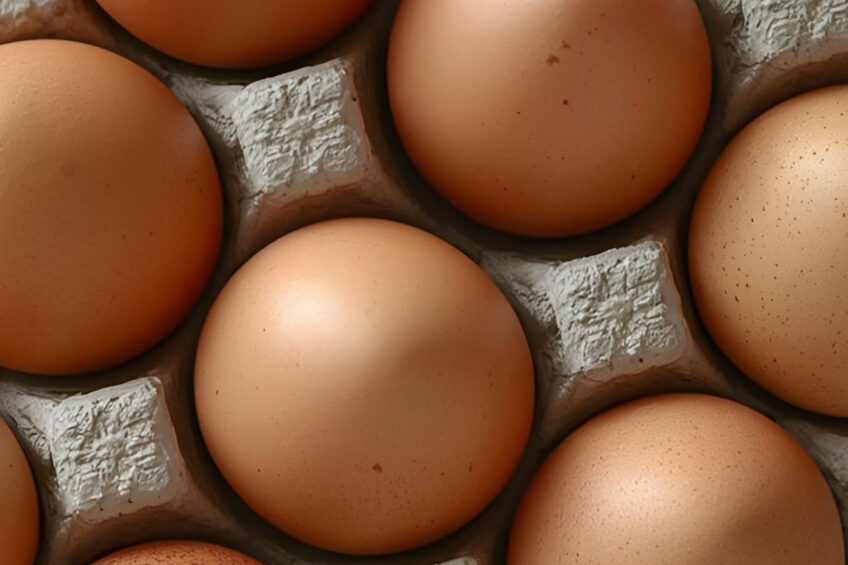
This article examines how the solubility of these minerals can affect eggshell quality, a key factor in both egg safety and economic value.
The formation of a complete egg takes approximately 24 hours from ovulation to oviposition. Early in this process, the shell membrane is formed. Among other components, three minerals, calcium, zinc and manganese, play a crucial role in this process. How can the solubility of these minerals affect eggshell quality?
Solubility and bioavailability: what is the connection?
Highly soluble mineral salts have long been regarded as highly bioavailable; consequently, sulfates (e.g., ZnSO₄, CuSO₄) are routinely employed as reference standards when determining the relative biological value of alternative trace-mineral sources. Recent data, however, demonstrate that the rate and extent of dietary mineral dissolution are not reliable proxies for intestinal uptake and utilisation.
If we take calcium as an example (Figure 1), eggshell calcification in the uterus begins from the mid-afternoon to early evening. Crystalline CaCO3 is deposited on mammillary cores of the shell membrane and is built up into the highly organised columns of the palisade layer, which gives the shell its strength. This creates a high demand for Ca during shell formation. Fine limestone particles are a fast-dissolving source of Ca. However, nutritionists use strategies that extend the time of release of Ca from the digestive tract for a longer period during the night, such as feeding large-particle Ca, to reduce bone Ca mobilisation and increase shell quality.

The relationship between solubility and eggshell quality
While Ca represents the main constituent of eggshells (95% of the matrix is composed of CaCO₃), trace minerals are required for a specific process. Traditionally, trace minerals in layer hens’ diets dissolve quickly in the upper digestive tract, where they may interact unfavorably with calcium or phytate. In contrast, slow-release mineral sources can bypass these interactions and be absorbed more efficiently in the small intestine. This improved bioavailability can lead to better shell quality, even at lower inclusion rates, compared to conventional sources.
In vitro manganese dissolution kinetics
To demonstrate that solubility is not necessarily linked to the bioavailability of trace mineral sources, an in vitro study was conducted at a research laboratory. The study compared how quickly different trace mineral sources dissolved at the bird’s gizzard pH of 3.0. As shown in Figure 2A for manganese, the conventional sulfate form dissolved almost immediately, whereas the slow-dissolution source (from Animine, France) released manganese gradually and continued dissolving even after one hour.

In vivo eggshell fracture force of hens
To determine whether a slower rate of solubility would affect eggshell formation, a 20-week laying trial was carried out at a research facility in France. The study involved 936 White Leghorn hens (60 weeks of age), allocated into 12 replicates of 26 birds each, across 3 dietary treatments:
- Negative Control (NC): Basal diet supplying only 43 ppm Zn and 36 ppm Mn.
- Fast-dissolving trace minerals: Diet containing 85 ppm Zn and 95 ppm Mn as sulfates (ZnSO4 and MnSO4, respectively).
- Slow-dissolving trace minerals: The same 85 ppm Zn and 95 ppm Mn provided as slow-release Animine products (HiZox and ManGrin, respectively).
Eggshell fracture testing revealed a clear advantage (Figure 2B) for the slow-release Animine treatment compared to the negative control, with the sulphate group yielding intermediate results. These findings suggest that trace minerals released more gradually in the upper gut are not less bioavailable than fast-dissolving ones, and may even contribute to measurably stronger shells in commercial layers.
Opportunities for laying hen nutrition
 In summary, solubility alone is an inadequate measure of a trace mineral’s nutritional value for the bird. It is the bioavailability, driven by the mineral’s release profile and its absorption in the gut, that ultimately determines its efficacy in supporting vital biological functions. Minerals that remain bound in the small intestine before release for absorption demonstrate advantages, enabling more efficient absorption and utilisation while minimising interference from other dietary components.
Embracing slow-release sources of trace minerals such as zinc and manganese is a potential approach for the poultry industry to achieve superior shell quality and bird health, potentially with lower dietary inclusion rates, thus delivering both economic and animal welfare benefits.
References available on request.
Join 31,000+ subscribers
Subscribe to our newsletter to stay updated about all the need-to-know content in the poultry sector, three times a week.