Battling bird flu – Friedrich Loeffler Institute’s 20-year report

Since emerging in China in the mid-1990s, highly pathogenic avian influenza (H5N1) has spread worldwide. On Valentine’s Day 2006, during an icy German winter, HPAI H5N1 was detected for the first time, according to a 20-year review by the Friedrich Loeffler Institute, Germany’s national reference lab for animal diseases.
Two whooper swans found dead at Wittower Fähre a ferry crossing on Germany’s Rügen Island, tested PCR-positive for avian influenza, followed by numerous other wild birds and the first poultry flocks. The island of Rügen was the focus of daily reporting media reports for weeks and was effectively sealed off by extensive protective and restrictive measures. Uncertainty dominated the public debate, placing the Friedrich Loeffler Institute under intense media scrutiny.
Faster and increasingly more reliable diagnosis
But it was also the start of the massive use of real-time PCR for the fast and reliable diagnosis of large numbers of samples from such an outbreak. Since then, many things have changed.
Diagnostics using real-time PCR have been perfected and next-generation sequencing (NGS) allows the rapid obtaining of entire H5N1 genomes in the shortest possible time. Subtyping, which used to take almost a week, is now usually completed within 24-48 hours. This allows the path of the virus to be tracked more precisely and risks to be better assessed. Communication has also become more professional, and processes between authorities are now largely harmonised.
Progression of the bird flu virus
However, the virus has also continued to optimise, spread globally, conquer new continents and repeatedly lead to waves of outbreaks in Europe and also Germany, Friedrich Loeffler Institute warns. Bird flu remains highly topical and always brings unexpected developments.
Recently, in the US and the Netherlands, HPAI H5N1 viruses caused udder inflammation in dairy cows. The virus also persisted in summer and led to considerable losses in breeding colonies of coastal birds.
In the autumn and winter of 2025/26, thousands of grey cranes died in Germany and other parts of Europe. The virus also caused devastating losses in the poultry sector, often leading to temporarily higher prices for poultry products and making certain products temporarily scarce or even unavailable.
Avian influenza control and prevention
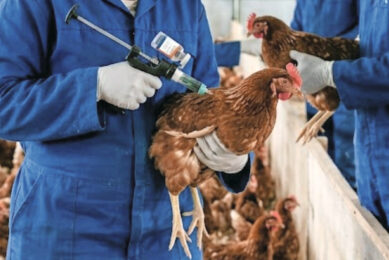
The protection of poultry populations, economic consequences as well as the monitoring of possible zoonotic risks of the HPAI viruses and the protection of humans continue to pose major challenges. The Friedrich Loeffler Institute continues to conduct intensive research on these topics in many international collaborative projects. It advises decision-makers in disease control, develops optimised diagnostic concepts, compiles and analyses data. Monthly updated risk assessments support poultry farmers, veterinarians and bird conservationists in control and prevention on site.
Join 31,000+ subscribers
Subscribe to our newsletter to stay updated about all the need-to-know content in the poultry sector, three times a week.