Avian influenza vaccination doesn’t fully protect French ducks
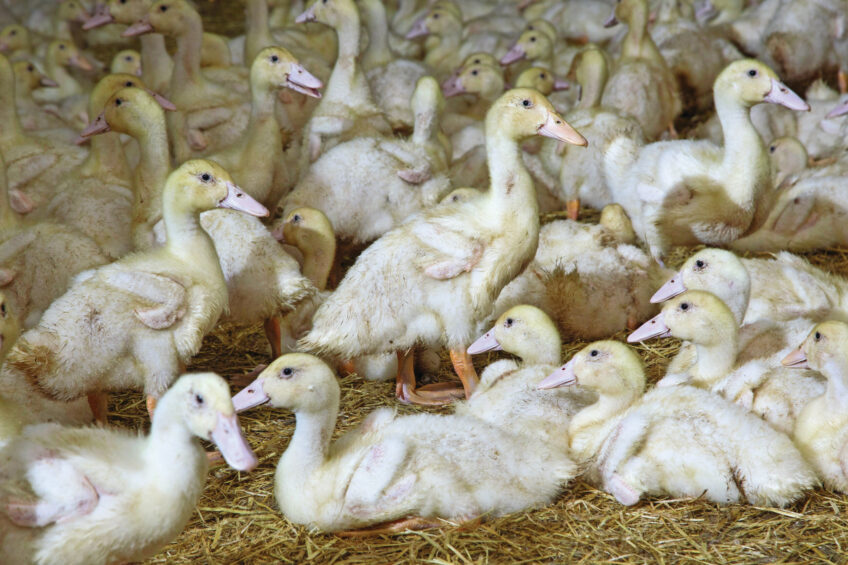
Over half of the ducks vaccinated against avian influenza in France are still not fully protected against the virus.
A model from France’s agency for human and animal health, Anses, shows that only 40-45% of ducks achieve full protection from a complete vaccination scheme. The rest are either partially protected (due to ongoing vaccination) or have waning immunity.
In fact, Anses’ experimental estimates indicate that protection levels in ducks over 10 weeks old decline over time. To counter this, foie gras ducks, which are typically held for an average of 16 weeks, receive a third vaccine dose.
Mandatory vaccination for ducks
In October 2023, France became the first European country to mandate vaccination for all ducks on farms with more than 250 birds, following devastating avian influenza outbreaks in previous winters.
By 31 March 2024, 51 million doses had been administered, covering over 95% of ducks on affected farms. Most received 2 doses: the first at 10 days of age and the second about 20 days later. This protocol has been followed in subsequent vaccination campaigns.
Bird flu campaign effectiveness
To calculate the effectiveness of those massive and costly campaigns, experts of Anses developed a model based on practical information collected in the field by the state’s directorate-general for agriculture.
“From the percentages of livestock holdings fully or partially protected, one can assume a certain level of protection for the whole duck population. Observing the vaccination rules by the production sectors is essential to optimise that protection,” Morgane Salines, scientific expert for epidemiology, health and welfare at Anses said.
Slowing the spread of the avian influenza virus
Colleague Béatrice Grasland, head of avian virology and immunology, adds: “Vaccination doesn’t stop infection by the virus, but it limits the clinical signs and diminishes the excretion of the virus by infected animals, thus slowing down a further spread within the farm or to other holdings.”
The model also enables testing of vaccination scenarios not yet in use. One option is to skip vaccination during periods of lower avian influenza risk to reduce high costs for the state and poultry sector. However, Anses deems this unviable. Without summer vaccination, immunity develops too slowly, leaving ducks unprotected during the high-risk autumn and winter periods.
Join 31,000+ subscribers
Subscribe to our newsletter to stay updated about all the need-to-know content in the poultry sector, three times a week.